Showing posts with label Death. Show all posts

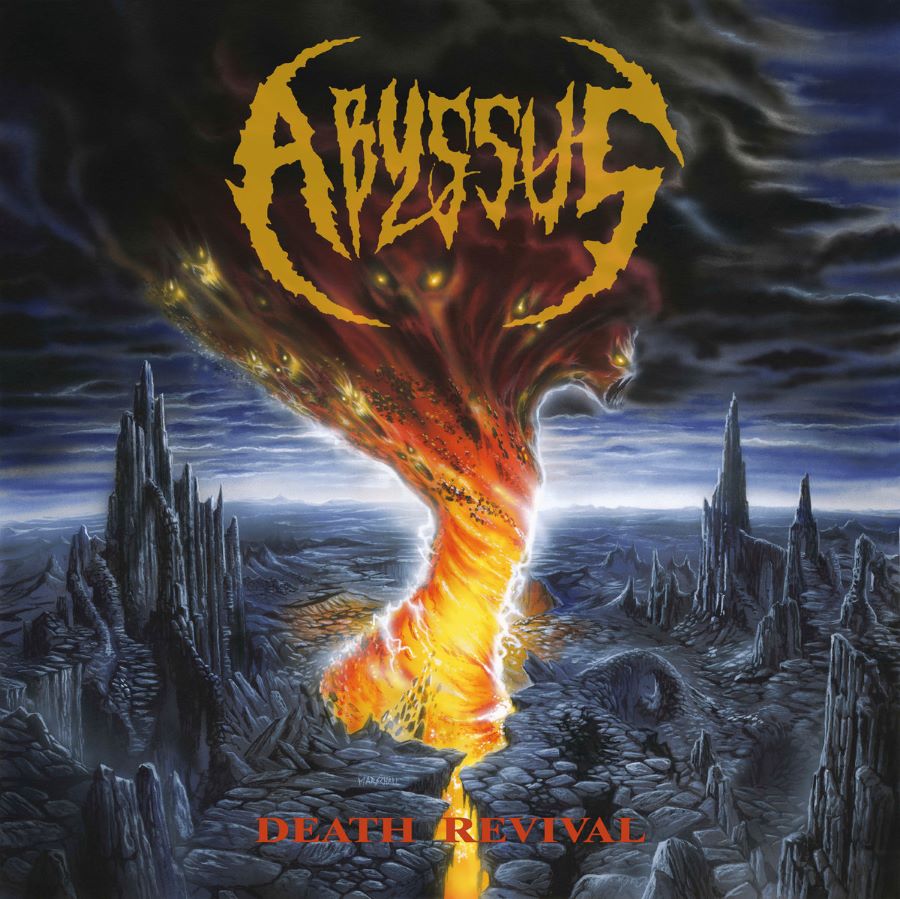
Abyssus - Death Revival

Abyssus - Death Revival

Beginning from the title alone, and after listening just the first few seconds of the first song, Metal of Death, it is made clear that this record is an homage to classic death metal of the late 80’s, early 90’s. What is also evident throughout the album is the high quality of the songs and a meaty production that takes us back to the early days of death metal. At the end, the feeling that stayed with me was that it is more than just a homage. It is indeed a death revival.

From the perspective of the creators, if I am not mistaken, death metal ought to be suffocating, aggressive, relentless, terrifying, based on great riffs and a growling voice that comes from the deepest of the deeps. I believe they had the goal of creating a death metal album that if released in 1991 would now be placed among the great death metal releases, along with Leprosy, Cause Of Death, From Beyond et al. and I also believe that they achieved their goal.

Starting from the cover art, made by Andreas Marschall, and moving to the music itself, everything seems to be in its proper place. The length of the album is just 33 minutes, but they are more than enough to enjoy riffs upon riffs and to growl along with Konstantinos Analytis about The Beast Within or our Uncertain Future. Genocide begins with the pontic lyra and it is made clear that this song is about the genocide of the Pontics by the Turks at the beginning of the 20th century (I could mention here that I am of Pontic descend). The Witch, a less than 3 minutes song, manages to include everything necessary for a stomping death metal song. The album closes with the lengthier song, Where Wolves Are Out To Hunt, a slow paced death metal fog that gradually accelerates to mid paced where Analytis growls

They are coming for you

They are coming for you

Watch out!

Death Revival manages to be among the best releases of 2022, even if we are still at the beginning of the year. The quality of the music is top of the line and every metal fan that enjoys death metal will find here everything they want.

Death Revival was released from Transcending Obscurity records on the 21 of January. There are two things remaining now. Firstly, to see them perform their material on a show and secondly, to get my hands on the vinyl release.

Godless Angel - The Conjuring Of Four


Godless Angel is a one man band formed by Derek Neibarger. He plays groove death/thrash, that reminds me of Byzantine and Lamb Of God and he has released three full length albums and an EP prior to the release of The Conjuring Of Four, which was released on April 4.

The Conjuring Of Four has 8 songs in total, with the first one being an intro, three interludes and four metal songs. The interludes work as thematic bridges, where the songs move from one to another. The composition is based heavily on crunchy riffs, lead guitars and solos. In comparison with the previous release, Harvester Of Shadows, the lead guitars are more disciplined and work with the riffs instead of surrounding them. They sound better and more cohesive.

The voice is rasp and dry and, along with the dry production, work well together, but it is placed on top of the music and not along with it. The drums sound flat and not interesting. I’d say that the strongest part of Godless Angel’s music is the combination of riffs and lead guitars. The aesthetics of the music is not of my liking and it fails to connect with me. Overall, The Conjuring Of Four is a collection of mediocre songs, with some good moments and the lead guitars being the highlight of the album.

Recommended Track: The Flames Of Eternity

Label: Atomic Zombie Records

Phobocosm - Bringer Of Drought


This Montreal based quartet released their debut album, Deprived, in 2014. It was a great death metal album with thick and warm production, swirling riffs and a drummer that holds strong and memorable rhythms. They have the ability to create imageries via soundscapes and music. And they know that. Bringer Of Drought steps into dark and depressive ambience and doom aesthetics while playing swirling death metal riffs and leads. The overall feeling and production is darker that its predecessor and they have a broader and looser approach in composition. The songs are more open, the circles are broader and the structures take longer to complete.

Bringer Of Drought expresses a holistic and global catastrophe. It is about the feeling of being taken over by the waves that the lead guitar is creating, the beats of the drums and the narrator’s voice describing our impending end. What was predominant in their debut is now the means to move further into their own path, by going beyond the compositional boundaries of death metal and enclosing chaos and darkness through ambience.

Engulfing Dust opens the album with a doom oriented structure that moves slowly for the duration of the 8+ minutes. It works as an introduction to the album and the beginning of our descent. With slow drum patterns, a nice leading melody and the dominant voice, it sets the ground for the next songs.

Tidal Scourge comes and the drummer shows his skills. The circular patterns, other times slow and other times aggressive and fast, are impressive. The contrast between the leads that move as though they want to break away from the structure and the rhythmic drums that move in spiraling motion, create the sense of anxiety and fear. It feels like a menacing wind that can suffocate you and bury you under dust and rocks.

The third song, Ordeal, is the shortest and denser song of the album. Everything that is Bringer Of Drought is heard and felt in this song; the leads that can madden you, the strong and rhythmic drumming, the clear wall of sound created by the bass and the imposing narration over them.

Fallen closes the album on a high note. It has two themes that replace each other. It builds slowly and then bursts out through the leads and the fast drumming, moving back and forth, in a pendulum motion, between chaos and calm.

This album is, as they titled it, a bringer of drought and within it you can listen and experience both the desperation that comes during the chaotic storm and the drought that is left afterwards; a movement between ambient desolation and hopeless war against powers that are beyond human reach.

Phobocosm’s second album is about 35 minutes with four songs and it is constructed methodically, emphasizing the doom and ambient aura, with leads that feel like a spiraling wind and drums that appear as structures of stone or marble, depending on the pace. It builds a storm around the core elements of death metal. A very good album and I feel that they have a lot more to give. The best is yet to come from them.

Recommended Track: Fallen

Released: 13/5/2016

Howls Of Ebb - Cursus Impasse: The Pendlomic Vows


Howls Of Ebb is a duo of musicians that like to move into uncharted realms and get their hands dirty and muddy. They don’t just play death metal, they create the whole environment of a death metal fantasy world. It is the aesthetics of their music that helps the listener get sucked into, explore and experience a deviant world, filled with riffs, leads, solos, drum patterns that seem scattered but they are actually the pillars and a narrator that moves from whispers to growls, like a dark spirit that visits us in our nightmares. Cursus Impasse: The Pendlomic Vows should be viewed as a whole, a fully developed construction of apocryphal musings. It brings out a sense of rocking and fun. It is dark, it is twisted, it is muddy but it rocks. And that is not easy to achieve.

Their identity, the thing that makes them who they are as musicians, is the different paths that the instruments take, creating a form of dissonance and diversity, while still working together to create a coherent song. The composition is a structure of sounds that move around an axis, while they take different forms. Ambient sounds, leads and the narration have a playful tone, like a Trickster that enjoys messing with our minds and make us a part of this concave, weird and abnormal world of theirs.

The production creates a warm environment, like a cloud of heated vapor inside a humid cave. The drums sound like wooden ritualistic toms of ancient litanies, playing patterns that could accompany the high priest’s mumblings of mystical appearances in search for the dark morbid Zen. 

For example, Maat Mons’ Fume begins with ambience, drums and bass that set the environment. A guitar appears, playing a simple chord that works in the background for the duration of the first part of the song, creating an eerie atmosphere. The riffs and the mumbling of the voice work together, until the song builds up and the voice takes over. The guitars work with solos and leads around the voice and the central circular riff.

They have a skill at composing unusual song structures that emanate an unnerving, dark and creepy atmosphere without being aggressive. Attractive, mysterious and weird, Cuscus Impasse: The Pendlomic Vows is an album for those who like to have fun in ancient mystical ruins and conjure the spirits of unknown worlds.

Roteen' Blisssss and Zee-Luuuvft-Huund, the members of HoB, debuted with “Vigils Of The 3rd Eye” in 2014 and fully expressed their unique sound; an impressive album that gained attention. Last year they released an EP, “The Marrow Veil”, that ventured further into their fluid, unconstricted madness. With Cursus Impasse: The Pnedlomic Vows they appear to be more defined, if anyone can say this for HoB without having a smirk on their face, and they play music with one foot on the beyond and the other rooted in death metal.

The cover art reflects the aesthetics of Hob’s music. A painting called Theoin by Agostino Arrivabene. Go and admire his work HERE.

Recommended Track: The Subliminal Lock – A Precursor To Vengeance

Released on April 15th, 2016

Nucleus - Sentient


Imagine a religion of alien sentient beings. One could argue that an advanced alien type 3 civilization (according to the Kardashev scale) will/do/did not have any form of religion, since we project logic and reason at the forefront of advancement. But if we take into account that we are both sentient and logical/rational, then a spiritually and rationally advanced civilization would be more accurate. The one doesn’t exclude the other and this correlation can be detected in art. It is not only mind and it is not only heart. There is both method and freedom from method, structure and release from within it.

Imagine if we reached these heights of rational and empirical thinking, devoid or oblivious to the fact that consciousness contains both thought and heart, and then ask ourselves: Would there be art? Imagine a futuristic world where music is nonexistent and considered a part of human history. Maybe even be frowned upon as a barbaric and uncivilized form of expression and communication. What a horrible world this must be? Thank the gods of all times and spaces, this is not the case in our current timespace.

Our timespace is a ship floating in the endless voidness. Let us view the ship, the non-sentient structure, as the product of rational and empirical thinking and the passengers as the heart of it. If we see it as a whole, we may come closer to what “Sentient” from Nucleus is.

Nucleus play death metal that is reminiscent of American death metal acts that had a more progressive and complex song structure. Their uniqueness comes from the aforementioned introduction between heart and mind and the way they communicate in every song.

The drums and the bass play in a simple manner, creating the basic stripped down structure of sounds. The drums work with patterns that change form but yet remain precise and disciplined. They give away the aesthetic of the marching effect we listen in industrial music. The bass works very closely with the drums. It maintains the thick wall of background sound that gives mass and depth to every song. This is the ship.

The heart is always a slippery and undefined function. It moves, it explodes, it strikes, it flutters, and it changes forms. The riffs and the voice are the conscious beings on board of that ship. The riffs are swirling, spiraling in circles from within the ship and upwards. Lead guitars appear from within them and play solos that create the unsettling feeling that only death metal can create. Twisting and ugly and frightening, this album might as well tell the story of an interstellar travel that ended up beyond the event horizon and deep into the timeless hell. A rational account of a tragedy.

The voice is the storyteller, moving above the instruments, singing about the planet “Dosadi”, as it is described in the sci-fi book “The Dosadi Experiment” by Frank Herbert. The “Cantos” is, as Wikipedia explains, a form of division in a long poem and it could be attributed to the novel series “The Hyperion Cantos” by Dan Simmons. I do not have the lyrics, but we can safely assume that the lyrical themes of “Sentient” came from Sci-fi worlds (novels, movies, tv series).

All of these different aspects work together and create a tight and cohesive debut album from Nucleus, with the riffs and solos being its strongest asset. The riffs are engaging and inviting to the listener. You will move with them, bob your head, air guitar and even feel the joy of headbanging while you are in the bus, the car, home alone, in the middle of town square or what have you.

I really enjoy this album. I would say that my favorite riff/riffs are that of “Insurgent” and I am assuming that it is about a great galactic battle. The pacing of songs change, the riffs are all good and the song structures are interesting and engaging. I find all songs to be of the same quality.

As an end note, the cover art is made by one of the most prominent artists in metal, Dan Seagrave, and it reflects the album’s quality and aesthetics. Oh, and why does the logo remind me of something?

Recommended track: Insurgent

Release date: 15/04/2016

Zealotry - The last Witness


(This review is also featured at No Clean Singing. You can read it HERE.)

Zealotry is a Boston based death metal band and they have been around since 2009, when they released their first demo. The Last Witness is their sophomore album and my first exposure to their music. Their members play in various other known bands. Tougas, for example, plays in Chthe’ilist, who released an impressive debut album earlier this year, and First Fragment, who will release their first full-length in the next month. Zealotry play a unique and difficult-to-approach death metal and The Last Witness is a tough nut to crack, but once you’ve done that, you’ll be exposed to a mesmerizing creation.

But who is the last witness? And what is he a witness of? Let us begin from the artwork and then proceed to the music. Maybe this isn’t a very common approach, but neither is Zealotry’s music.

What I find impressive about the artwork is that it gives away a sense of totality. The all-Seeing Eye is the creator which gave life through the double helix DNA, taking root in the ground like a tree. Different life forms appear and among them are birds and humans approaching the center of creation, reflecting the unending search of man for god or the overmind.

I think it reflects the overmind’s power over mankind; a force that leads man toward ascension, but in the expanse of creation itself, as it is described in Arthur C. Clarke’s sci-fi novel Childhood’s End”. Or it could be viewed as the technical social construct of control and power over all. A man-made creation, through the means of eugenics, that will give birth to absolute control, since everything and everyone will be predetermined from their birth — automatons that are endlessly repeating programmed tasks in a dystopian world, where freedom doesn’t exist even as a word. The all-Seeing Eye is not god, but a machination for control.

The artwork may reflect the lyrical themes and the loose sci-fi concept of the album, but in a way it reflects the aesthetics and the music displayed within it. It is as dark, distorted, and twisting as it is progressive, complex, and adventurous. It is death metal that could be described as progressive in its true sense. It is not about the myriad of notes and the solos and the technicality, but about the complex structures of the songs. They feel as if they are morphing, shifting spheres that change the surface of what we see, but always remain solid in the core. Imagine gigantic orb structures that change shape in time, yet remain the same in essence; that essence being, Death Metal.

The songs move from the basic structures into an exploration of new territories. Each instrument speaks its own tongue, creating a communication of seemingly different languages. A conversation of individuals, where each one has something unique to say and express on a collage of impressions, painting an overwhelming and at times mystical and difficult-to-uncover story.

In order for The Last Witness to uncover itself it must be listened to with full attention. The listener must allow himself, or herself, to sink into it, in an effort to experience the totality of it. There are so many different expressions and paths taken on each song that it may bewilder the listener. It is exciting and at times exhilarating and adventurous, aggressive and atmospheric, subtle and attractive, like a secret that wants to be exposed, but finds it almost impossible to do so. It is death metal that offers a wide range of impressions and emotions through structures that take surprising forms.

The movement of the guitars stands out in Zealotry’s music as their most unique and impressive asset. From riffs, they move into a chatter of lead guitars, merging into the bass lines and under the voice, and then they turn into solos that move in swirling formations. They feel like a conversation between the voice and the guitars. Sometimes they cooperate and stand together and at other times they take different paths. The bass has a very distinctive role, too. It is clear in every song, holding more specific forms and placed just above the drums. Their music may bring to mind the progressive death metal music of the ‘90s and a number of bands whose complexity was what made them known.GorgutsIncantationAtheist, Demilich, and others can be mentioned, but only as references and not as direct influences.

The songs, even though they stay the same with each listen, having the same notes with the same structure, still change every time you listen to them. They feel like a magical book, where every time you open it, something different appears. The words have changed place and the story changed form, the characters are different and they take different paths, they make different choices that have different impacts on themselves. Maybe it reflects the current mood of the listener, like a mystical mirror, or maybe it is the listener itself who changes form, exposing different faces every time.

The Last Witness feels so wide-ranging and complex that even after a lot of repeated listens, it still amazes me. It is not an easy album, but it is so interesting and filled with impressions and imageries that will stand the test of time. This is one of the best death metal albums I’ve heard this year, even if I can’t completely pinpoint why or express specifically what it is that I like so much about it. I would say the guitars, but if there wasn’t so much depth created by the bass and the drums, the ambience and the samples that are being used in places, the different vocals and the change in pace and paths, then I wouldn’t spend so many words trying to explain why I like it so much, without really explaining anything. And this might be the best/worst compliment I have ever made for an album.

Recommended Track: Heralding The Black Apostle


Release date: 22/04/2016

Begrime Exemious - The Enslavement Conquest - Review


The riff is and always will be the core of metal and rock music. It may be simple, it may be technical, but it will always be the riff that will catch our attention, make us jump along with the music, drink a few beers and have fun. One could argue about the other, more spiritual and experimental approach, where the riff may take a secondary role and I am down with it. I like both, when they are done with inspiration and conviction.

Begrime Exemious belong to the first, large category of composition. They are a straight forward riffocentric band and it can be immediately understood from the very first song.  A punk aesthetic fills your ears, riffs fly and the aggressiveness is expressed in a way that feels fun and enjoyable. “The Enslavement Conquest” is a fun, punkish black/death metal album. 

10 songs and almost 50 minutes of unstoppable riff menace make “The Enslavement Conquest” an album that I am certain it should be felt at a concert, if someone wants to experience the full dynamic of it. They play music best suited for live performances and it is all because of the riffs. The production is helping in communicating a feeling of an audio torrent moving towards you. It feels loose, but it is not, it feels punk, but it is not. The composition is simple but successful and the riffs have the necessary murkiness and groove. At times it brings to mind a certain British death metal band.

Right at the middle of the album there is a slow and doomy song that allows the listener to stretch and relax. A well placed song, since the minor problem in this type of albums is that a continuous aggressiveness may tire the listener. Then we have the cover of “Impending Diabolical Conquest” from Incantation, which may feel like it doesn’t fit in the album, since their style is different, but it shows the genre’s fluidity. It doesn’t feel misplaced, since it has the same aesthetics with the rest of the album.


Begrime Exemious is a concert band, for that I am certain. Their strong and memorable riffs and aggressive composition make them suitable for mosh, beer and circle pit dancing. While I may sit, with my head phones, in a calm and familiar environment while listening to “The Enslavement Conquest”, air guitaring and moshing feels the most natural expression. It tells me to go out and drink a few beers and while I am at it, headbang with friends. It tells me of the origin of death metal. And if I was to explain it in two words, then: Darkness and fun, my friends! Darkness and fun!

Hath - "Hive" - Review


There is a difference between music that creates visualizations and music that speaks directly to the heart, without the mind engaging. This difference cannot be defined by genres and a distinction like that could be misleading, since music is experienced in different forms. What appears as a mystery to me is that art can be highly subjective and at the same time be loved by a huge number of individuals. There is universal language, something that is actualized though music, but it has its beginnings in a place that is common in us all. Such is the approach of the mystic and as such “Hive” appears to speak to me.

“Hive” is the debut EP from Hath and it has, in every song, a sense of movement. Like a hammock that swings between undefined points. Especially the bass gives away the sense of swelling, like the surface of the sea does when it forms waves. They appear and they fall back in endless cycles. Between those movements the lead guitars speak in simple motifs, giving away the sense of diversity. They are decorating the song, dressing it in pretty melodies that transform into solos. Yes, solos. It feels like solos aren’t cool any more, but they can add so much emotion and depth to the songs.

The voice is growling and talks and at times feels complacent with what is being expressed, while other times invokes something greater. “Hive” is not aggressive but it is not introverted either. It moves from being angry to esoteric and this is what makes it feel so rich and interesting. The songs have a progressive feel to them, where the composition is more complex than usual, with layers that develop and riffs changing form, pace and rhythm. Listen to “Commandment” for example; the EP’s shortest song and you’ll listen to the diversity.

Hath have released a very good and promising debut EP. I am certain that an equally good or even better release from them will be coming in the future. I do not know if they are in the process of creating a new album or searching for a label or both, but what I do know is that they deserve our attention. Listen to “Hive”.

The Wakedead Gathering - Fuscus: Strings Of The Black Lyre


Who are they? What are they doing here? Where are they coming from? These are some questions that may arise in someone’s head when listening to The Wakedead Gathering’s music for the first time. It is not something unique or special in any way. It is just good enough to exclaim: “They will be a good band.” And then you see that “Fuscus: Strings Of The Black Lyre” is their third full length, that they have been around since 2008 and then you scratch your head in denial. “I thought I knew shit.”

The underground can be a deep well of souls and riffs and discovering new bands, that are not new, is part of the game. It is like a gift, that it is not a gift, waiting for the researcher, the explorer of sounds and atmosphere, the investigator of riffs and growls of the night. Maybe they are spirits and they were imprinted into the collective metal consciousness just a few days ago. Maybe I should stop writing gibberish and get to the point.

They balance atmosphere with quality riffs and each song is throbbing with a rhythm that brings to mind traditional death metal covered with dark atmosphere. The pace shifts from slow and doomy to fast, with leads and solos driving through the riffs and the voice being a loud whisper, a demon that sings softly in your ear about curses, witch hunt, the Great Grey Queen and mystical chants that are lost in time. The story is being built along with the dark atmosphere created by the music. It draws the listener in with its mystical and otherworldly glamour.

What stands out as the identity of The Walkedead Gathering is riffs+atmosphere. I want and am generally inclined towards riffs when listening to metal. It is my thing. For example the core riff of “Amnioticysts” is murky, thick and engaging. The voice is covered with the chaotic ambience of the music, giving the sense of slowly sinking into mud. It feels grey, solid, threatening and otherworldly. It is like a fog that slowly covers you and suffocates you.

Simple riffs, murky sound, engaging rhythms, shout whispers and classic death metal leads. It is not about anger and speed and technicality. It is about the proper atmosphere, a bunch of good riffs and decent composition. They induce it like it is their nature. They probably live in a cemetery, drinking blood from skulls, eating from the carcasses.

“Fuscus” is a good death metal album but it doesn’t seem to call me back as much as I would want it to. And I say this because The Wakedead Gathering have the potential to create a great death metal album. It is a fun and enjoyable experience but feels like it could have been more. Or maybe, I just want more. 

Barus & Hadit - EPs de la muerte


Barus have heavy, big, sharp riffs that move from elliptic rhythms to full circle, slow stomping. The singer at times speaks, as if his describing something that has taken control and rules over us and other times shouts with intensity, while the riffs move in curved formation. The drum patterns form changing structures, painting an ever evolving and moving structure that can swallow everything. Each song engages the listener with hooks and evolves smoothly. They feel as a vortex that is not only awe inspiring but also soothing and relaxing. “Our doom is imminent so we might as well accept it and enjoy it”, the singer could preach before the riffs take their place at the front. This is their debut EP and it’s a damn impressive one. Go on then. Listen to it! The EP has a name your price tag.


Hadit is Chaos, as described by Thelema. They are also a band that moves in the blackened/deathened side of darkness and they create suffocating atmosphere. This EP, an Introspective Contemplation of the Microcosmus, is an intense and thick entity that uses melody as something that exists only in the surface of everything. It is bait and the riffs are coming out in waves before they sink back into the black chaos. As the listener sinks deeper, the riffs and the guitars close in, the drums are hitting relentlessly, until they back up and a doomy pace takes the lead, allowing the song to breath and the voice to rise higher. It is a meditation on chaos, obviously, but it is not as chaotic as it may seem at first. There is structure, there is depth and life in it, but it is so thickly built within the walls of the music that the listener has to allow himself of herself to sink within it. It will not come to you. You need to go there and live it. This is definitely not music for jogging, or for anything else for that matter. Just listen attentively, in a meditative state and it might grow within you.


This is cassette only, limited to 150 copies, and streaming. Streaming is good. I like streaming. Streaming it is.

Contrarian - Polemic (Review)


The music of Contrarian is not unusual. What is unusual though is the aesthetics of it. Do you remember the sound that “Individual Thought Patterns” had? Cynic’s “Focus”? In the mid 90’s Progressive Death Metal had a sound and a feel to it that was unique and distinctive and “Polemic” feels like it came from that era.

The aesthetics, not the progressiveness of death metal, did not really take off from there. It was forgotten for reasons unknown. Maybe it wasn’t that commercial or not that enjoyable. I do not know. I find it enjoyable and adventurous and when I first heard “Polemic” I was positively routing in favor of it and wanting it to be good. I wanted an album that sounded like this and I found it. Well, actually, I did not found it. It found me, but that is another story.

It has a 90’s feel to it and the song structure and development is progressive to the core. This is death metal that really is not that much of a trend anymore. No murkiness, no slams and breakdowns. Just good ol’ progressiveness, with jazzy breaks, eloquent and assaulting drumming by George Kollias, solos and leads that fly through the songs making them sound aery.  Then the solos dive in, becoming part of the song, the shift is changed, the rhythm brakes and it develops to a new direction that is similar, but not quite. It gives a sense of exploration and creativity, where every instrument is opinionated and plays a vivid role to the whole structure of it, creating a solid entity that never keeps a solid form.

 “Polemic” as a whole is impressive. It has everything that a progressive album needs and it also has the common sense to keep the restraints on and maintain a feel of a song structure. Listen to “Libertarian Manifesto” and observe, with your ears, maybe with your eyes if you have visualizations while listening to music, the morphing of the music, the change of the structure and the difference in the narration. It feels like a process of building and then the whole of it just sinks into nothingness. From within it another theme is being built, while always maintaining a sense of coherence and storytelling.

Production wise, I think the voice was placed deliberately in the center of the whole, maintaining the same breadth, while everything swirls and develops around it. If we see it as a mathematic formula, the voice is the constant and everything else is a variable. This creates an interesting contrast. The guitars are free to move and explore and tell their own stories, as parallel narrations of nonlinguistic entities.

While everything in me says ‘yes’, I have found that I will always, and I mean always, check the player when the song “Diogenes At Delphi” is playing. I think, for reasons unmanifested to me, that the album is just a little bit longer than it should. But then I saw that it lasts about 32 minutes and it perplexed me. It still does.

Striking the balance between quality and quantity is not an easy task and it almost always results into something that the artists cannot control. It is the listener, as a passive experiencer and a third party, that can offer such an insight and it is not done consciously, but rather as an reaction that derives from the relationship between the listener and the music. But, does this really matter?


“Polemic” has every ingredient necessary to make and interesting and intriguing progressive death metal album and the overall result is more than satisfying. I want to believe, like Mulder does, that it is the complexity of the song structure that gave this negative impact towards the end of each session. Even if the listener has a great time, nothing remains in memory. But, considering this is their debut album, I am very positive about their future and their ability to create memorable, enjoyable, adventurous and fun albums. The album closes with a cover of Death’s “Nothing Is Everything” and it shows the love and respect that Contrarian have for “Individual Thought Patterns” and Death. Go on. Listen to it.

Cruciamentum - Charnel Passages - Review


I like my death metal to have the stench of decay and corrosion. To feel like it is something big and inevitable. To have riffs that pulsate the inner vibrations of the darkness and a voice that commands the spirits that lurk into the shadows. Cruciamentum have all that.

It has swirling riffs that grasp the listener and throws him/her into their world. “Charnel Passages” is attractive in its ugliness and emotional in its desolated nature. It is a deserted landscape of a long gone civilization, that has succumbed into its own ego and is now lost in time. Never to be revived but to be viewed as a warning. We all have the same fate.

Their song crafting is exceptional. Though it’s the guitars that lead their horrific amalgam of chaos (I like being dramatic) everything is working cooperatively, giving each song a sense of being. Of individuality.

While the drums create repetitive patterns, building the structure for every song, and other times just assaulting the listener, the guitars have a viscous sound, creating some sort of inhuman existence. Aesthetically, it is very pleasing to the ear, if one has affection for this kind of music. If that someone doesn’t, then this will probably frighten his clean and innocent soul. It is dark, chaotic, yet with discipline and passion burning underneath it.

For example, the song “Tongues of Nightshade” is a masterpiece of death metal craftsmanship. Everything is placed, I suppose subconsciously, in its perfect place and time. But then “Rites to the Abduction of Essence” is not a lesser song. It maintains the same sense of something gargantuan that is slowly sucking us into its bowels.

The lyrics work very well too. They make the music transform into something visual. If we see them as the narration of the music, then when the vocalist spits out: “Beyond the shrine of madness, there lies revelation…” and immediately follows a swirling riff, which is also the core riff of the song, there is nothing else to do, other than have a deviant smile and nod your head in approval.

The flaws can be spotted in the production. The vocals could be a bit higher in the mix, just a bit. Sometimes they feel enclosed within the guitars, not being able to be fully expressed. The guitars could also have more body and volume. On the other hand, the whole album, along with the ambience, works great into creating the necessary atmosphere.


The layering and the circular evolution of each song is great. The orchestration, with the classic death metal leads that turn into solos and how they disappear behind the walls of the riffs, the dry voice and the repetitive, and at time ritualistic drum patterns make “Charnel Passages” one of the best death metal albums of the year.

NILE - "WHAT SHOULD NOT BE UNEARTHED" - REVIEW


“Speak not of the Gods to me.”

The feelings that Nile create are of a massive, majestic and holistic entity. With complex song structure, intense delivery of double vocals, bombarding drumming and the use of samples recreating what the music in ancient Egypt could be like, they take the listener to a mythical and mystical journey into places that have long been dead.

Sanders knows what he is talking, singing, yelling and growling about. He has a deep knowledge of the mythology and history of ancient Egypt and through that he writes stories.

The album begins with an unusual, for the band, storytelling. “Call to Destruction” is about the destruction of ancient temples by Islamic extremists. An excerpt says:

“The preservation of human heritage
And the enduring achievements of Mankind
Are secondary to the will of Allah.”

and the lyric video that was released begins with a disclaimer. I can understand that. The lyrics are being written like the one that is singing is in fact the one that endorses the destruction of our cultural heritage. This, from the perspective of the listener, creates a very weird relation with the song. Just imagine singing these lyrics, while taking a walk or a bath. And you will do it because the song fucking slays. It will stick with you. “Allaaaaaah.”

Nile’s mastering is not only about writing top-notch riffs. It is about the song flowing. How every section is connected and pushes through until the end of it. From the bridges, to the mid-section riff, to the vocal delivery that feels like it is coming from within the song. Like a warmonger general that shouts to his soldiers in the midst of a battle.

This is where several songs have flaws. Some songs don’t have good sequencing. Actually the not-so-good parts take the listener out. Let’s dissect “Liber Stellae – Rubeae”. It begins strong, introducing us to the song with a heavy riff and the unstoppable drumming. Then, at around the 30 seconds mark, the guitars plays a lead that should serve as a canvas for the vocals, but it is dull and repetitive. At around 1:10 the song fucking explodes into awesomeness, with a beautiful lead that turns into a riff and the vocals being thrown at you. The song then repeats the intro riff and then sinks into the doomy section of the song, which closes it smoothly. It is just a flawed section that doesn’t do justice to the song.

The title song “What should not be unearthed”, should not be unearthed and included. It is just a mush up of music sections which results into a song that is not a song. After that comes one of Nile’s best songs. “Evil to cast out evil” is catchy, with a great riff and a solo that reminds exactly what made death metal, death metal.

On the same pace, “The Age of Famine” is an uneven song, with great sections and boring ones. It is more of a doomy song that finally catches up towards the end of it. But it feels like it wasn’t worked on as much as it should be worked on. Finally, the album closes with one of the best songs contained in it. “To Walk Forth From Flames Unscathed” can be called a classic Nile song, leaning towards the doomier sound and it is perfect for closing.

I’d say that this is an uneven album that doesn’t do justice to the potential that it showed. The evolution of Nile can be seen from album to album. They have a more defined and refined approach to song writing, sometimes even stripping it down to its essentials. But it doesn’t always work out. Creating songs that are extreme and chaotic and at the same time disciplined, as to grab the listener, isn’t easy and that can be seen with “What Should Not Be Unearthed”. Sometimes it works, other times not so much.

NILE - "What Should Not Be Unearthed" - Review


“Speak not of the Gods to me.”

Τα αισθήματα που δημιουργούν οι Nile είναι αυτά μίας τεράστιας, μεγαλοπρεπούς και ολιστικής οντότητας. Με πολύπλοκη σύνθεση τραγουδιών, έντονη εκφορά των διπλών φωνητικών, βομβαρδιστικό drumming και την χρήση samples που προσπαθούν να αναπαραγάγουν την μουσική της Αρχαίας Αιγύπτου, παίρνουν τον ακροατή σε ένα μυθικό και μυστικιστικό ταξίδι σε μέρη που έχουν πεθάνει εδώ και αιώνες.

Ο Sanders ξέρει για ποιο πράγμα μιλάει, τραγουδά, φωνάζει ή γρυλίζει. Έχει βαθιά γνώση της μυθολογίας και της ιστορίας της Αρχαίας Αιγύπτου και μέσω αυτής γράφει ιστορίες.

Το album ξεκινά με μία ασυνήθιστη, για το συγκρότημα, εξιστόρηση. Το Call To Destruction έχει να κάνει με την καταστροφή αρχαίων ναών από εξτρεμιστές του Ισλάμ. Ένα τμήμα του λέει:

“The preservation of human heritage
And the enduring achievements of Mankind
Are secondary to the will of Allah.”


και το lyric video που κυκλοφόρησαν ξεκινά με μία αποποίηση. Το καταλαβαίνω αυτό. Οι στίχοι είναι γραμμένοι ώστε αυτός που τραγουδά να υποστηρίζει την καταστροφή της πολιτιστικής κληρονομιάς μας. Αυτό από τη σκοπιά του ακροατή δημιουργεί μια πολύ περίεργη σχέση με το τραγούδι. Φανταστείτε να τραγουδάτε αυτούς τους στίχους ενώ περπατάτε ή κάνετε μπάνιο. Και θα το κάνετε γιατί το τραγούδι σπέρνει. Θα κολλήσει στο κεφάλι σας. “Allaaaaaah.”

Η αυθεντία των Nile δεν είναι μόνο στο να γράφουν πρωτοκλασάτα riff. Έχει να κάνει με την ροή κάθε τραγουδιού. Με το πώς κάθε τμήμα ενώνεται με το επόμενο και οδηγεί προς το τέλος του. Από τις γέφυρες, στα riff του μεσαίου τμήματος, στα φωνητικά που βγαίνουν μέσα από το τραγούδι. Σαν τις κραυγές ενός πολεμοχαρή στρατηγού που φωνάζει στους στρατιώτες του εν μέσω της μάχης.

Εδώ είναι που αρκετά τραγούδια έχουν ελαττώματα. Κάποια δεν έχουν καλή αλληλουχία. Στην ουσία, τα όχι καλά τμήματα αποσπούν τον ακροατή και τον βγάζουν εκτός. Ας αναλύσουμε το “Liber Stellae – Rubeae”. Ξεκινά δυνατά, εισάγοντας μας στο τραγούδι με ένα βαρύ riff και το ασταμάτητο drumming. Έπειτα, περίπου στο 30 δευτερόλεπτο, η κιθάρα παίζει ένα lead που θα εξυπηρετούσε σαν καμβάς για τα φωνητικά, αλλά είναι βαρετό και επαναλαμβανόμενο. Στο 1:10 περίπου το τραγούδι εκρήγνυται σε φοβερό, με ένα πολύ όμορφο lead που μετατρέπεται σε riff και με τα φωνητικά να πετάγονται προς τον ακροατή με επιθετικότητα. Έπειτα επαναλαμβάνεται το εισαγωγικό riff και βουλιάζει στο doomy τμήμα στο τέλους του τραγουδιού, το οποίο το κλείνει ομαλά. Είναι ένα ελαττωματικό τμήμα που δεν δικαιώνει το τραγούδι.

Το ομώνυμο τραγούδι What should not be unearthed δεν θα έπρεπε να ξεθαφτεί και να συμπεριληφθεί στο album. Είναι απλώς μία σύνδεση μουσικών τμημάτων δημιουργώντας ένα τραγούδι που δεν είναι τραγούδι.  Μετά ακολουθεί ένα από τα καλύτερα τραγούδια των Nile. Το Evil to cast out evil είναι πιασάρικο, με πολύ καλό riff και ένα σόλο που υπενθυμίζει γιατί το death metal είναι το death metal.

Ακολουθώντας τον ίδιο ρυθμό, το “The Age of Famine” είναι ένα ανισόρροπο τραγούδι, με πολύ καλά τμήματα και βαρετά. Είναι περισσότερο ένα doomy τραγούδι που προς το τέλος γίνεται κάτι καλό. Αλλά νιώθω ότι δεν το δούλεψαν όσο έπρεπε. Τελικά, το album κλείνει με ένα από τα καλύτερα τραγούδια του album. Το “To Walk Forth From Flames Unscathed” μπορεί να ονομαστεί ένα κλασσικό κομμάτι των Nile, το οποίο κλείνει περισσότερο προς τον doom ήχο τους και είναι τέλειο για κλείσιμο.

Θα έλεγα ότι αυτό είναι ένα άνισο album που δεν δικαιώνει την προοπτική που έδειξε. Η εξέλιξη των Nile φαίνεται από album σε album. Έχουν μια πιο καθορισμένη και εκλεπτυσμένη προσέγγιση στη σύνθεση, και κάποιες φορές ξεγυμνώνουν τα τραγούδια στα βασικά στοιχεία τους. Αλλά δεν δουλεύει πάντα. Το να γράφεις τραγούδια τα οποία είναι ακραία και χαώδη και ταυτόχρονα πειθαρχημένα, ώστε να τραβάς τον ακροατή, δεν είναι εύκολο και αυτό φαίνεται στο “What Should Not Be Unearthed”. Κάποιες φορές δουλεύει, άλλες όχι και τόσο.