Showing posts with label review. Show all posts

Venom Prison - Erebos

 Venom Prison - Erebos

Venom Prison have a rather intriguing name. Why not “Venomous Prison.”? It may be a slight of the tongue or just a better pronunciation of the band’s name. On the other hand, it might be the expression of living circumstances, where life is experienced as a slow, corroding venom that paralyzes and kills one’s psyche.

I am under the impression that Venom Prison released Erebos under a loose concept and each song tells a story that deals with abuse, suffering, injustice, oppression, victimization, through the symbolic lenses of Greek Mythology.

All myths, and I include here the mythological stories of religions that have survived to this day, contain within them a narration of the experienced reality that we share, albeit under a symbolic use of language. This property of myths is what makes them such great stories. We can find meaning in them, even though our logic cannot fully grasp and explain.

In this sense, Erebos needs to be experienced and felt in a similar manner; A story that speaks both directly and indirectly about the experienced reality. Under the names and stories of the mythological creatures and deities that appear throughout the album we can find a story of oppression, misery, rage, fear, power, abuse, war. We can, moreover, get in touch with the personal experiences of the narrator more easily and feel compassion for them, even solidary rage and passion, and is exactly this unique property that has made metal music to be personal and communal at the same time.

In other words, Venom Prison succeed in creating both compelling compositions with great riffs and intense choruses and at the same time have lyrics that can be shouted and screamed and make the experience of the album more complete. I would assume, since I haven’t seen them perform, that they must have a rather captivating presence on stage.

These past years have been interesting and intense since communication through internet has started to shape our reality. One of the main positive attributes of this still forming reality is that voiceless people now have a voice and get in touch with other people with similar experiences and pursue connection and change. By making the world smaller and the distances almost nonexistent, we lost a sense of desire to connect but at the same time we gained the ability to inform ourselves in a more complete and multicolored way. Now, lyrics like:

“Trapped in a cycle of a manic mind hypnosis

Schizophrenia. Misdiagnosis.

Trapped in a cycle of a manic mind hypnosis

Who is to blame? The crimes contested.”

And their meaning is not to be met solely in the work of Michelle Foucault per se, but to the living person that is at the same time in another continent and next to us. The voicing concerns of abuse are not met only in art, but through it we may connect with individuals that have suffered like us.

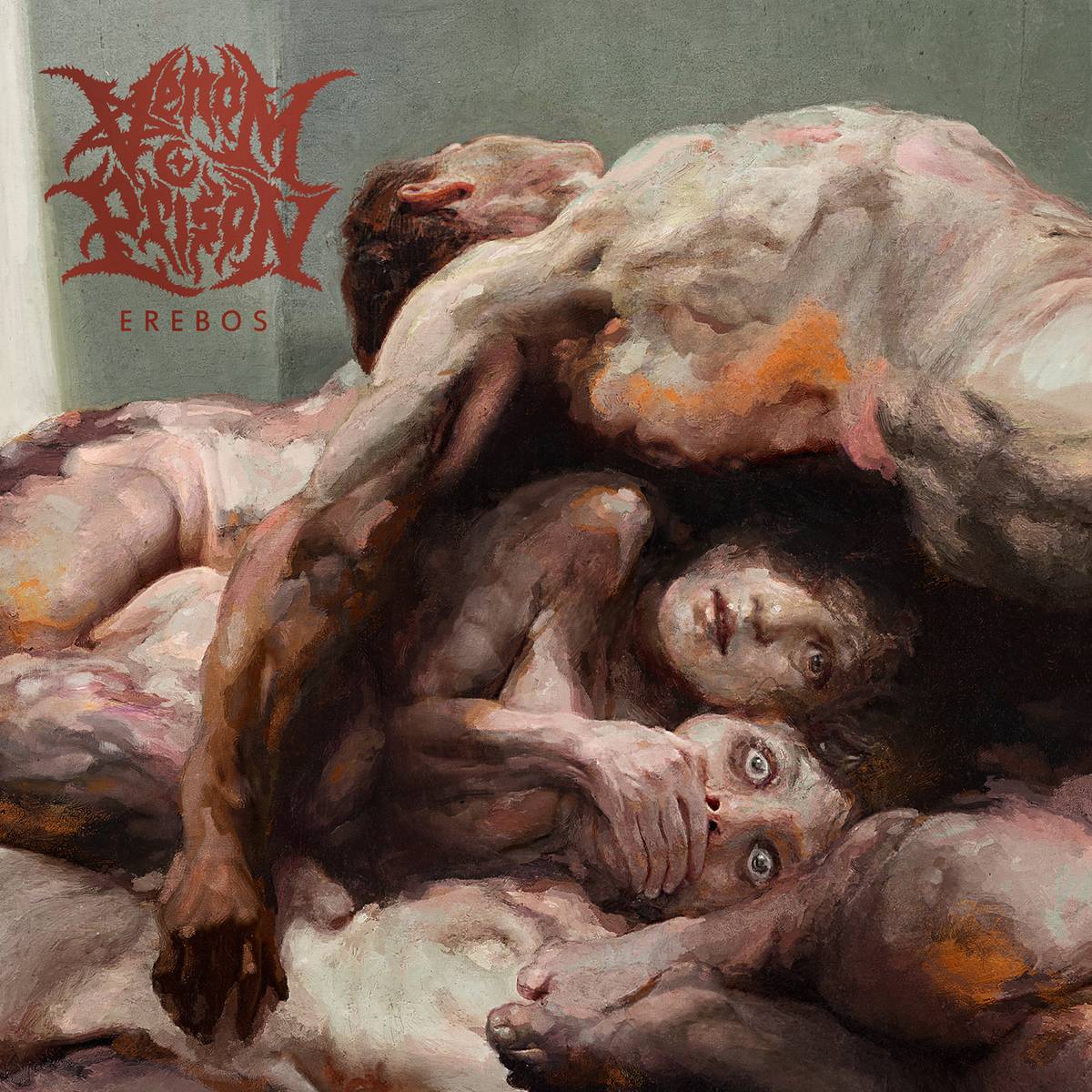
Seeing the cover of the album, designed by Eliran Cantor, we can feel a sense of imminent danger and at the same time of solidarity between two women that have woken up inside a mass grave. The woman on top has a motherly concern in her eyes, showing us that she has been awake for quite some time and is aware of the circumstances, while the woman below just woke up in a horrible new reality and her scream is muffled by the more experienced and wiser woman, purely for her safety. Maybe we see here the fragmented personality of a woman in the aftermath of her abuse, waking up in a chaotic world called Erebos.

Hence, the music is chaotic, moving in multiple directions, creating complex compositions that accompany and bring to the surface the passionate performance of Larissa Stupar. But, what is made clear as the album progresses is that the themes cover a wider, far more terrifying reality than the personal experience. We are becoming part of a collective abuse forced down upon the people through means of state control.

Maybe the struggle that is presented in the cover and can be felt in the album is concluded in the lyrics of the final song:

“Seek justice or satisfy public desire?

State killing ritualised, ritualised.

Seek justice or satisfy public desire?

State force manifested.

Manifested.

Somewhere

Deep inside,

Empathy

Is still alive.”

Maybe the terrified young woman on the cover is our empathy and our humanity that has just woken up in a horrible reality. Only a question remains:

Seek justice or satisfy public desire?

Vorga - Striving Toward Oblivion

Image

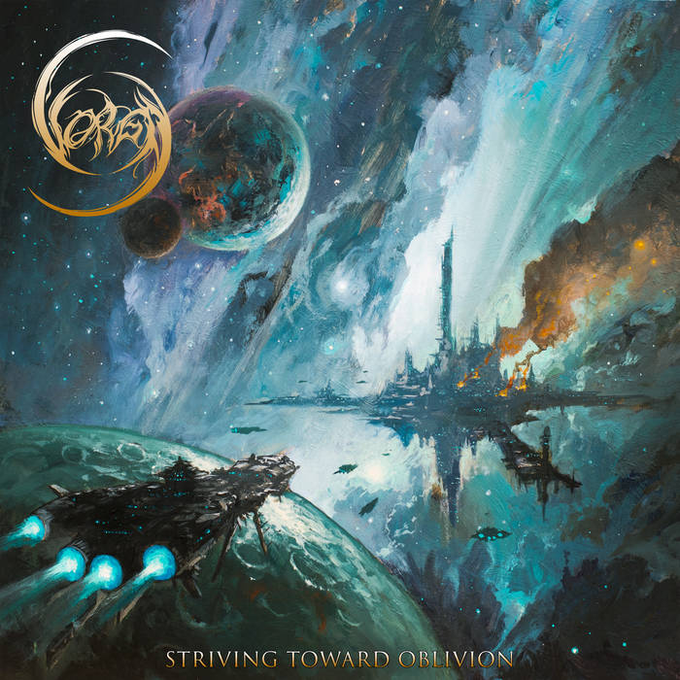
Beginning from the artwork and the title of the album, we get the primary idea of what we are getting into. Cosmic black metal, at least for me, is not easy to create, and the reason for that is simple. It can get stretched into ambience in favor of atmosphere and get lost in it, creating soundscapes that actually miss the point of cosmic black metal.

So, what is the point? The best way to convey the aesthetics of cosmic black metal is, for my part, analogy. Even though writing about music is like dancing for architecture, as Martin Mull puts it, the equivalent of cosmic bm is cosmic horror, either in movies or books, even in video games. The main and core concept behind cosmicism is the insignificance of humans in the universal, or cosmic, scale. It is built upon existential dread, nihilism, absurdism. It is, in other words, a subgenre of black metal that captures the human psyche in its darkest corners of existential crisis. Man is, and forever will be, subject to powers or gods, that are way beyond his perception and ability to comprehend in a way that is scaled within his cognition. It is, in the end, a vehicle of transporting his soul into the vast void of uncreation, where all that is created has been in a state of eternal consumption by the great unknown, the beasts that are behind the blackness of space, where time ceases to have meaning.

That is what Darkspace, Sphere and now, Vorga can capture with their music. Each of them, while having commonalities, attributed mainly to Darkspace, take their own galactic road and invite us to join them on a journey of awe, terror and grandiosity.

Striving Toward Oblivion manages to build upon black metal riffs, the well-known ‘railway riffs’ of tremolo picking, and a voice that is a little lower than the music in the mix, the sense of awe and swirling chaos that can entertain and, at the same time, fulfill the black metaller’s need to escape reality into a fantasy world.

What separates black metal, and to be honest all of heavy metal, from the rest of music, is its understanding of the need of the human psyche to imagine a world beyond the mundane and cruel reality. A world where beasts, gods, or lesser gods, dimensions and realms of possibilities exist simultaneously with ours, giving us a way to express ourselves and unload the negativity and toxicity through art that may be incomprehensible to most other people, but oh, so familiar and warm to us.

Have you ever noticed that metal can be extreme in a way that relaxes the senses? This is what Vorga achieve with their debut. They take us on a journey to the vast unknown, with swirling riffs and black metal melodies, a voice that is most likely a narration of the last minutes of humanity while on a journey to find a new world to exploit and destroy. Oblivion waits at the end of our journey, whether this happens in a few hundred years or millions of years. One day we shall be the stories of a future species with cognitive abilities greater than ours, where we will have a place in history similar to what dinosaurs have in ours. Until that time comes though, let us enjoy our striving toward oblivion.

Striving Toward Oblivion is released via Transcending Obscurity Records.

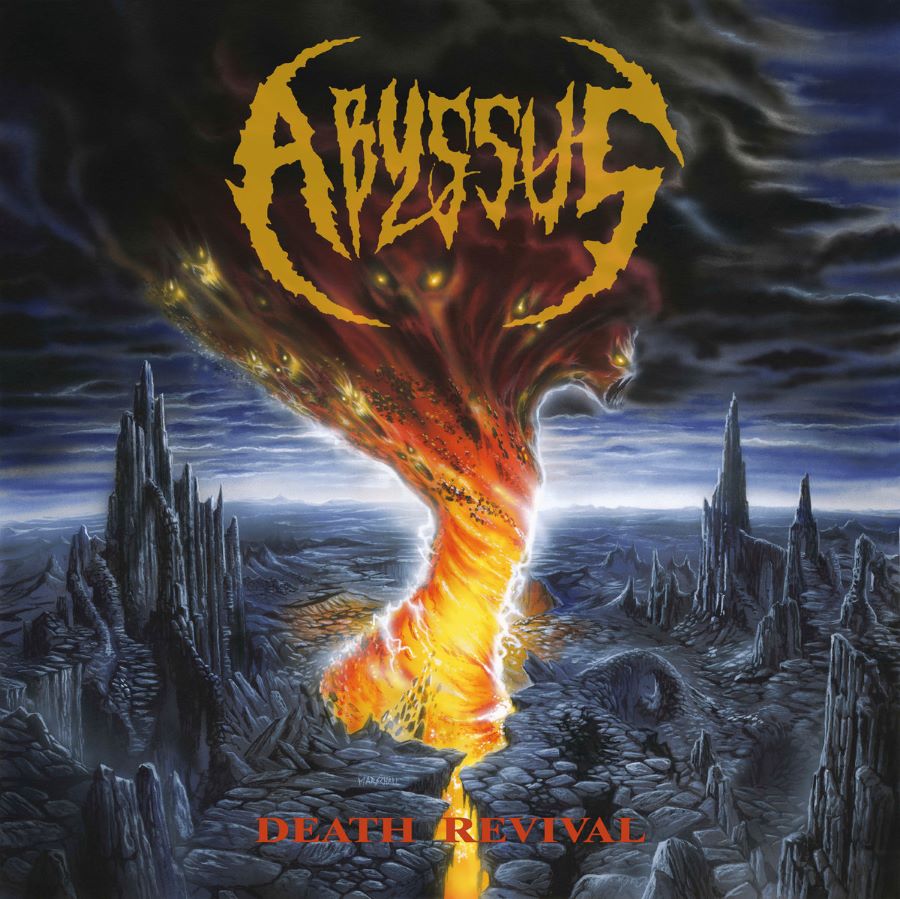
Abyssus - Death Revival

Abyssus - Death Revival

Beginning from the title alone, and after listening just the first few seconds of the first song, Metal of Death, it is made clear that this record is an homage to classic death metal of the late 80’s, early 90’s. What is also evident throughout the album is the high quality of the songs and a meaty production that takes us back to the early days of death metal. At the end, the feeling that stayed with me was that it is more than just a homage. It is indeed a death revival.

From the perspective of the creators, if I am not mistaken, death metal ought to be suffocating, aggressive, relentless, terrifying, based on great riffs and a growling voice that comes from the deepest of the deeps. I believe they had the goal of creating a death metal album that if released in 1991 would now be placed among the great death metal releases, along with Leprosy, Cause Of Death, From Beyond et al. and I also believe that they achieved their goal.

Starting from the cover art, made by Andreas Marschall, and moving to the music itself, everything seems to be in its proper place. The length of the album is just 33 minutes, but they are more than enough to enjoy riffs upon riffs and to growl along with Konstantinos Analytis about The Beast Within or our Uncertain Future. Genocide begins with the pontic lyra and it is made clear that this song is about the genocide of the Pontics by the Turks at the beginning of the 20th century (I could mention here that I am of Pontic descend). The Witch, a less than 3 minutes song, manages to include everything necessary for a stomping death metal song. The album closes with the lengthier song, Where Wolves Are Out To Hunt, a slow paced death metal fog that gradually accelerates to mid paced where Analytis growls

They are coming for you

They are coming for you

Watch out!

Death Revival manages to be among the best releases of 2022, even if we are still at the beginning of the year. The quality of the music is top of the line and every metal fan that enjoys death metal will find here everything they want.

Death Revival was released from Transcending Obscurity records on the 21 of January. There are two things remaining now. Firstly, to see them perform their material on a show and secondly, to get my hands on the vinyl release.

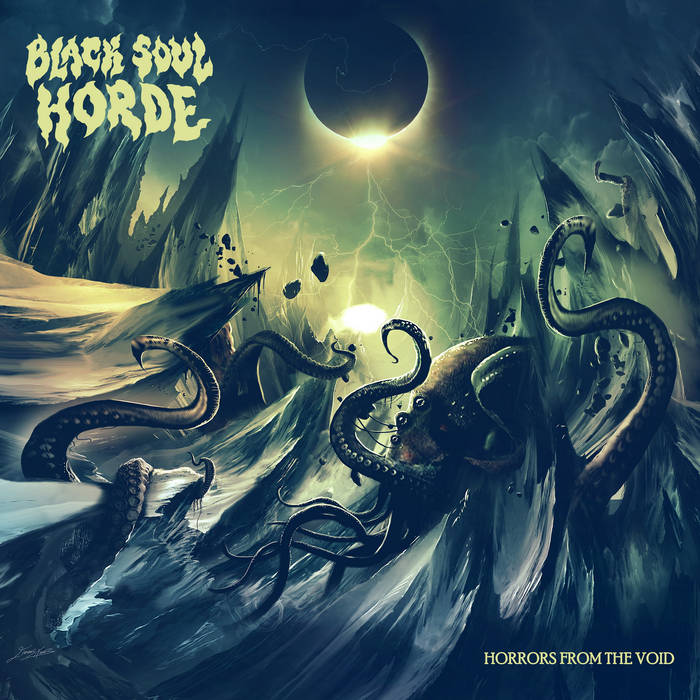
Black Soul Horde - Horrors From The Void


I am going to say it right from the start. Horrors From The Void is the best heavy metal album of 2021, and I say this while still listening to the album one month in and loving it. Horrors… is addictive like a drug. The power trio that consist the band achieved something unique. Everything works perfectly throughout the album; from the solos, the vocal melodies and the choruses, the riffs, the production and the Lovecraftian atmosphere, in approximately 50 minutes (including the two bonus tracks) Black Soul Horde managed to put together an almost impeccable album of heavy metal darkness. And I say almost because perfection is only given through the test of time.

Even though the band formed in 2012, I’ve only known them since last year with their sophomore release, Land Of Demise, seven years after their debut, Tales Of The Ancient Ones and I’ve only really listened to Horrors From The Void.

The first thing that caught my attention is the vocals. Jim Kotsis has a unique voice that actually plays a great part in forming the identity of the band. There have always been heavy metal bands with vocalists that move into a love/hate territory with their audience. Manilla Road, Cirith Ungol, Eternal Champion, King Diamond and others. For some, these vocalists are considered exceptional, while others find them unbearable. I would not place Kotsis among these ‘love them or hate them’ vocalists because to my ears and taste his voice is a perfect match to the music. These vocalists make all these bands sound distinct and separate themselves from everyone else. Now, put in the mix great heavy metal riffs, solos and choruses, accompanied with matching drum work and bass that give an intense, fleshy body to the sound and you get Horrors From The Void; an album that enriches heavy metal.

Listen to Beware The Deep, or Dragonfire. Listen to Beneath The Mountains Of Madness or The Curse and you will soon find yourself singing along with Jim Kotsis about the invasion of our world from Ythians, or the emerging of Fenrir from the void, or about the rise of Cthulhu where you will sing:

Immortal soul, I summon thee,
Your airless tomb can't hold you now
Dark shadows spread like wildfire from the abyss
Mountains collapse, then oceans boil
Atrocious nightmares come to life
Behold the sign written in blood: Beware the Deep!

Kostas Papaspyrou, John Tsiakopoulos and Jim Kotsis should be proud because they crafted an album of excellent heavy metal. We should also mention the work of Giannis Nakos of Remedy Art Design for creating the cover for Horrors From The Void; a cover that catches the mood of the album and gives the right first impression.  The only thing left for me now is to buy it on vinyl when released by Vinylstore.gr.

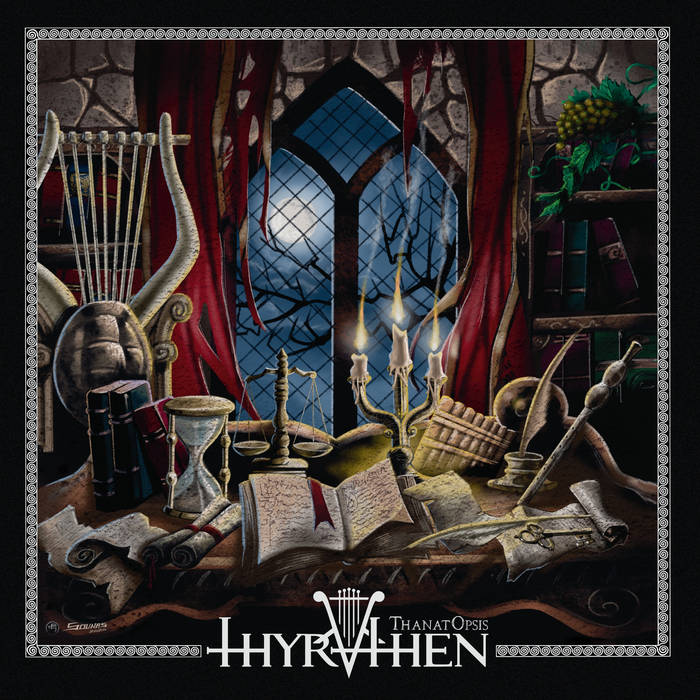
Thyrathen - Thanatopsis

It is always of interest to me when metal and contemplation are united. I chose the word contemplation, since the inspiration for the creation of an album can take many forms. A work of art can inspire art, but so can philosophy, history, religion, politics etc. The process of contemplation from the musicians is what brings the union of metal with something that also has an extensive body of ideas and forms.

In the case of Thanatopsis we begin with the union of ancient Greek tragedy on the Dionysian worship through the story of Euripides’s Bacchae with Hellenic black metal. Thyrathen structured the album like a tragedy and this is not just an ambitious task; it is a difficult task, or rather, a task that could easily turn into a series of bad songs. How can we unite black metal with ancient tragedy? The reality into which our ancestors lived is very far away from ours. Imagine a reality that is filled with gods and, along with the struggles of men, the gods seem to have the role of those who define their destiny and play with them. Hubris, defiance, vengeance, passions, loss, tragedy. The relationship of men with the gods has always been a tragedy. A divine tragedy.

From the living reality of the ancient Hellenes to ours there seems to be a discontinuity, where the one is not a descendant of the other. It is not the Dionysian worship that influenced the modern day west, but philosophers such as Aristotle, Zeno of Citium, Epicurus and others that moved and lived in the spirit of Apollo. Reason, logic, calmness, sobriety in thinking and understanding the world, the struggle to be virtuous and not be consumed by our passions are values that the west was built upon. But history shows us that things weren’t so simple or streamlined. We are lead gently, as the album progresses, to equate the Dionysian mania with the Christian zealotry and the destructions that both brought.

In the last couple of centuries there is a rise, a resurrection of the Dionysian spirit. A need for mania is evident in our lives, a need to escape the confines of reason and dive into our passions. There is a holy mania building up inside many a souls and this is where Thyrathen place their work. Nowadays, the struggle that we go through is the same with the one that humanity is stained with since the fall from grace. The conflict between chaos and order, reason and untamed energy, logic and ecstasy, sobriety and metheksis (=to get in touch with the divine), the conflict that Bacchae is based upon and represents. In the battle between conflicting brothers, Apollo and Dionysus, the yin and the yang of the Hellenic Pantheon, who is going to win? Thyrathen stand behind the Epicurean teaching which is tied to the album title. Thanatopsis. Meditare Mortem. Think of your death. Memento Mori.

Thyrathen means pagan in Medieval Greek, or if you want the literal explanation, it means beyond the door, meaning those outside the church. Thyrathen is a project of modern day pagans that have an extensive and impressive history in Hellenic black metal. Necroabyssious from Varathron and Alexandros from Macabre Omen, along with A.Z. from Kawir and Corax S. came together to record a concept that is heavily influenced by Euripides’s Bacchae but, at the same time, explore something new.

A well-known couple of opposites in the Hellenic pantheon is that of Apollo and Dionysus, both sons of Zeus. The Apollonian faith represents order, reason, and prudence, while the Dionysian faith that of irrationality and chaos, dance and wine.

The album begins the same way that Bacchae begins; with the narration of the coming of Dionysus from Asia to Hellas, Thebes and the rise of the new worship. Then Thyrathen gradually move into their own story, while the black metal riffs and the passionate performance from Alexandros take us, the listeners, to a journey in Ancient Hellas, reliving something that seems very distant and exotic.

With Thyrathen there are also a handful of musicians that play handmade ancient Greek instruments like the Lyre played by Thanassis Kleopa and the Diaulos played by Yannis Pantazis. The narrations of excerpts from Bacchae in track number 1 and from Sophocles’ Antigone in track number 8 are performed by Magda Katsipanou and we have Zisis Apostolidis on tenor voices and Agapi Papamitsou on soprano choirs.

It is evident that Thyrathen took their vision very seriously and dedicated themselves into creating a piece of art like Thanatopsis. I could go on writing about the story, explaining the mythistory behind the gods and the mortals that appear, analyze the philosophical concepts of Epicurus, write about the shaping of history from the zealots, but it would take away some of the joy and the experience that awaits those of us who are willing to sit with this album and allow ourselves to be absorbed by it. Spend time with it and it will reward you, I assure you. Thyrathen made their presence known in the metal world with an excellent album.  


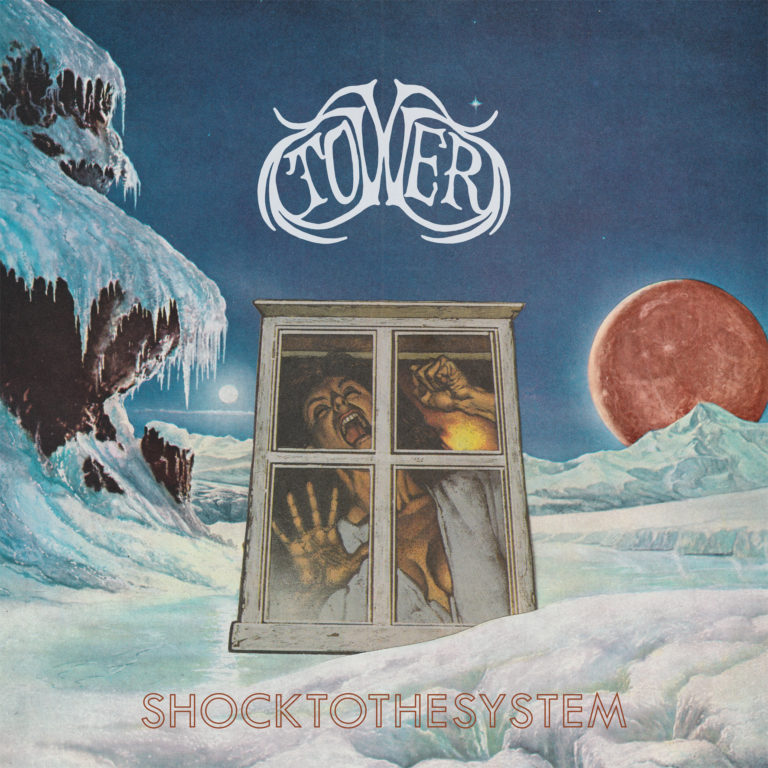
Tower - Shock To The System

Tower - Shock to the System

It is not easy to write about heavy metal that is pure of heart and true in a way that can leave you speechless in its honesty. There is nothing new here, but I’ll be damned if this album is not pure gold heavy metal that belongs four decades before our time: at the time were bands like this shaped the sound of heavy metal.

This company of brats is just unstoppable in its delivery of incendiary metal tunes. From the drums and base, to the one of kind voice of Sarabeth Linden, Shock To The System is relentless: an unstoppable slab of fun, carelessness and nostalgia for the time of heavy metal’s innocent years, that can be felt even from the album cover. It is the equivalent of films like First Blood, Midnight Run, Mad Max, Escape From New york, films that were filled with action but underneath it all, there was this sense of fun intertwined with danger.

The whole album is engrossing, since all the songs are filled with high energy and the performance of everyone is in top form, but I feel the need to stress out how distinct is Sarabeth’s voice and performance, shaping the identity of the band to something unique and special. Along with other heavy metal bands that have a woman behind the mic, bands like Savage Master, Shadowland, Sanhedrin and more, Tower have co-created a new wave of retro heavy metal that is filled with denim and leather that has the scent of a woman. A question that may arise to some minds is if this plays any role and my response would be yes and no. Yes, because the aggression of a woman’s voice, the edge that it gives, feels different and no, because it’s pure heavy metal with an honest heart and it doesn’t matter. It just doesn’t matter.

Shock To The System is an excellent album of heavy metal tunes that is both a testament and a promise for a bright future.

Mystras - Empires Vanquished and Dismantled


Ayloss is a restless spirit and he expresses his vision through different forms of music. One form that particularly stands out to my ear and taste in music, are the compositions that draw their origin from the folk music of the Byzantine Empire, the Ottoman Empire that followed and the migration of said folk music along with the peoples from Asia Minor during the tragic events of the Greco-Turkish war. To this day instruments like the santoor, the psaltery, the ney, the lyra, instruments that sometimes go back to the Hellenistic days before the great empires and other times to the middle east, in places like Persia and Syria, Turkey, Armenia etc., are part of the folk tradition and are still being used today.

Anyone living in Greece, Turkey or in the greater region of the Eastern Mediterranean will most likely feel at home if that person moves along the coastline. There is a familiarity in the music, the scents, the food, the stories, the traditions, despite all the differences and the conflicts and wars between the local peoples.

To this day there is tension and dispute and differences that drive a wedge between the various folk that carry with them the local traditions and a common history that is at odds with herself, since every point of view is opposing the neighboring one. One example of this is of course the recent political controversy on the name Macedonia and her rival suitors, bringing to mind the suitors of Penelope while Ulysses was trying to return back to Ithaca.

This is a land that is burdened with a history filled with tragedy, wars, gods, emperors, great Empires, great works of art and languages that go back to the beginning of civilization. As William Blake wrote in the Marriage of Heaven and Hell: “Without contraries is no progression. Attraction and repulsion, Reason and Energy, Love and Hate are necessary to Human existence.”

Conflict and tragedy breeds love and companionship. Death breeds life. Life feeds on life and viewing history through the lens of Marxian thought, everything is brought down to the essence of the eternal struggle: Class struggle. And this brings us to the vision of Ayloss from the perspective of the lyrical narrative that accompanies the music of Mystras’s second full length album Empires Vanquished and Dismantled.

The album begins with a piece of music that draws its influence from the instrumental epicness of heroic narratives combined with folk music. It is a great start because it gives a sense of an introduction to a story that will take us over deserts, over destroyed cities, over lands where blood was spilled to the soil and the rusty blades of the swords are waiting to be sharpened again.

Then we immediately fall into battle, where the lyrics describe how Christianity became a political tool and a sword for power. It is not an exaggeration to say that the Western Roman Empire was a successful marriage of the Roman virtue of dominance and the piousness of Christianity. This, of course, created a rather conflicted psyche in the European soul. The Crusades begun by instilling in the history of Europe the anti-Semitic sentiment to the local folks spreading the seeds of nationalism in an era where Empires where based on their multiculturalism. A great example of multiculturalism is of course Constantinople – the bridge that united the East and the West.

On the promise of the angels closes with what was never written down in history by name: that the slaves of the old cried for the masters of tomorrow in vain, since the masters where hung up, intoxicated by the promise of the angels and the glory of God. But, is God to blame or where the masters identifying themselves with God?

This album is not a philosophical inquiry into the history of the conflict between Christendom and Islam. It is rather a narration of the history, exposing the hypocrisy behind acts of valour and faith in a God that looked terribly distorted and evil.

Ayloss is very open and confident in his political views and through his art he expresses it vehemently. The second chapter in Mystras’s historical narration closes with a statement. Ayloss knows he is a heretic, and every heretic has a vision of a reality that opposes the dominant narrative. He assures us that they, the heretics, will be there until

Empires break into nations
Nations into tribes
Tribes into Communities


Until all notions and borders created by men
To divide between themselves
Until the excuses of all that desire to rule
Over other men
All rendered useless

Empires Vanquished and Dismantled is an excellent album that draws us in an adventurous journey through the medieval history of the Mediterranean. This is where history, tradition and black metal collide.

P.S. This here is a link if you want to listen to some traditional byzantine music. And, of course, I encourage you to search and to listen to folk music of the greater region of the Eastern Mediterranean from all these colorful traditions. It is truly magical.

Ethereal Shroud - Trisagion


The release of Trisagion, Ethereal Shroud’s sophomore album, came with the announcement that this is the last album. Joe Hawker, the mastermind behind Ethereal Shroud and sole member, decided to close this chapter and start anew. He has already released an Ep from his new project, Wisp, which I haven’t gotten around it yet, but from what I’ve read, it is not a continuation, but a different approach to his vision.

In 2015, Ethereal Shroud released They Became The Falling Ash, an album that quickly became a favorite and a classic in the atmospheric black metal circles. Joe Hawker, through Ethereal Shroud, relies heavily on atmospheres created by the guitars and the keys, giving a sense of a majestic journey into the heart of our being. It is a journey filled with emotions, and said emotions can be overwhelming, almost unbearable, because most of the times they are built gradually, following a spiral built up around a central melodic theme. In this way, songs that last around half an hour can feel like a short story, where the story arc is completed with the completion of the song.

In every album in metal we, most likely, are given the choice to either read the lyrics and feel the song in a more complete way, bringing us closer to the musicians intent, or to let go and just take this journey as it unfolds and allow our imagination to create stories of wonder and magic and dread and walk on whichever road it may lead us.

I generally read the lyrics and most of the times I am disappointed by them, mostly because I cannot create a story that can hold them together along with the music. But when the lyrics have cohesion and flatter the music, then the results can be impressive. This is one of these rare cases, where both the music, including the voice as an instrument, and the lyrics work together successfully.

If you read the lyrics of Chasmal Fires without the music, you will most likely feel the narrator’s distress, his dread and his ache for a lost part of himself, which is promised by the church, but at the same time it is taken away. He concludes with the existential sentiment of a man being contorted by the dogma, instead of actually achieving what is promised through the sacrifice of the Song of God: which is completion of our being through salvation. All this understanding and criticism revolves around the hypocrisy of the clergy. These lyrics express this sentiment clearly:

“We cannot pretend that the rules are the same for the blasphemer and the saint,

We cannot pretend that the rules are the same for the commoner and the priest.”

Trisagion was released close to the end of 2021 and had I listened to it earlier, it would have been included in my best of the year list. The first thing that intrigued me was of course the title. Trisagion means ‘thrice holy’, a standard hymn in all Orthodox churches and it goes like this:

Ἅγιος ὁ Θεός, Ἅγιος ἰσχυρός, Ἅγιος ἀθάνατος, ἐλέησον ἡμᾶς.

Hágios ho Theós, Hágios iskhūrós, Hágios āthánatos, eléēson hēmâs.”


And its translation is: “Holy God, Holy Mighty, Holy Immortal, have mercy on us.”

Right from the start we understand that the album deals with religious matters. Whether these matters are personal or not, are to be made known after we spend some time with the lyrics. Another idea concerning the title is, of course, that the album has three songs. Maybe it is a combination of these.

Maybe Trisagion is an album with three epic songs, dealing with the relationship of man with what is holy, beginning from distrust and the feeling of being betrayed, which is followed by the clear seeing of what it really is, a Discarnate form that led the wrath of man to wield the sword, and concludes with the departure of the narrator unto the stars, like an Astral Mariner, where he has finally found peace.

This album is an hour long journey in whichever world you feel most comfortable being. Whether it is the stars or the bottom of the sea, the music played here is the vehicle that will take us to where we need be.

Locust Leaves - A Subtler Kind Of Light


Her name is Ήβη (Heve). She is the goddess of youth; the daughter of Zeus and Hera; the cupbearer of ambrosia for the gods of Mount Olympus. She is eternal youth. But now, as her persona is cracking, she must search for the black star in the sky. She will become madness, maddened and “A Subtler Kind Of Light” is her story. It is a four song tragedy of the predetermined fall to the Law of Logos; a rebellion of the heart against reason; a war of body against mind; the defiance of God by man.

Ήβη is also the creation of a demiurge that goes by the name Helm. She embodies the creation that becomes aware of its existence; the painted figurine that rebels against the artist. As the stage is set, and as we understand ourselves in relation with her, separate from the world and in war with it, we follow her journey to freedom. The birth of self-consciousness is, after all, the seed of tragedy and those who must know freedom must walk the path to death.

Is it that we see injustice where there is justice? Is it that we see chaos where there is order? For every sentient being must take the path to know one self. Ήβη, the goddess. Ήβη, the creation. Ήβη, the martyr must fall before her creator. Nameless is she, Ήβη. Not a goddess, but a woman that denied her youth and with “Light” she departs.

The striking and lasting impression of these four (three to be precise, and you’ll know why by the end of this review) songs is the composition of seemingly unrelated themes; riffs that pierce through the deviant structures of notes that spark in an unorderly, illogical fashion. The lead guitars are the soul, the humane entity behind the endeavor of narrating such a story as they speak through emotions that explode with compassion and kindness through the solos of Ayloss (Spectral Lore, Divine Element) and Helm. The rhythms of Vorksaath (Zemial) on the drums work complimentary, pushing the songs and keeping them cohesive without stealing the attention from the impressive range of Nick’s performance. And I say performance because he plays two roles – the narrator, the God – The narrator is telling the story of silent Heve as she departs, explaining to the audience the reasons behind her rebellion, and showing us with pictures of esoteric struggle, the climbing to the “Pillar” that leads to her final Judgement and “Fall” before the all-knowing God. Lastly, “Flight” is closing the tragedy leaving the stage empty of every character and every environment, and with ambience and sounds we accept her death.

“A Subtler Kind Of Light” is first and foremost a tragedy and it succeeds in praising the human spirit and the human ingenuity. It also succeeds in communicating the limitations of the human entity, both within the story and without it.

As a character and as a creator that walks a path of rebelling and discovering one’s own true nature that inevitably leads to death, Locust Leaves are stretching their branches higher. What once were a few branches just above the ground is now becoming a full, mature, artistic project. - VISIT


“A Subtler Kind Of Light” is not only a monument to tragedy. It is also a monument to progressive metal.